
Becoming a founding designer

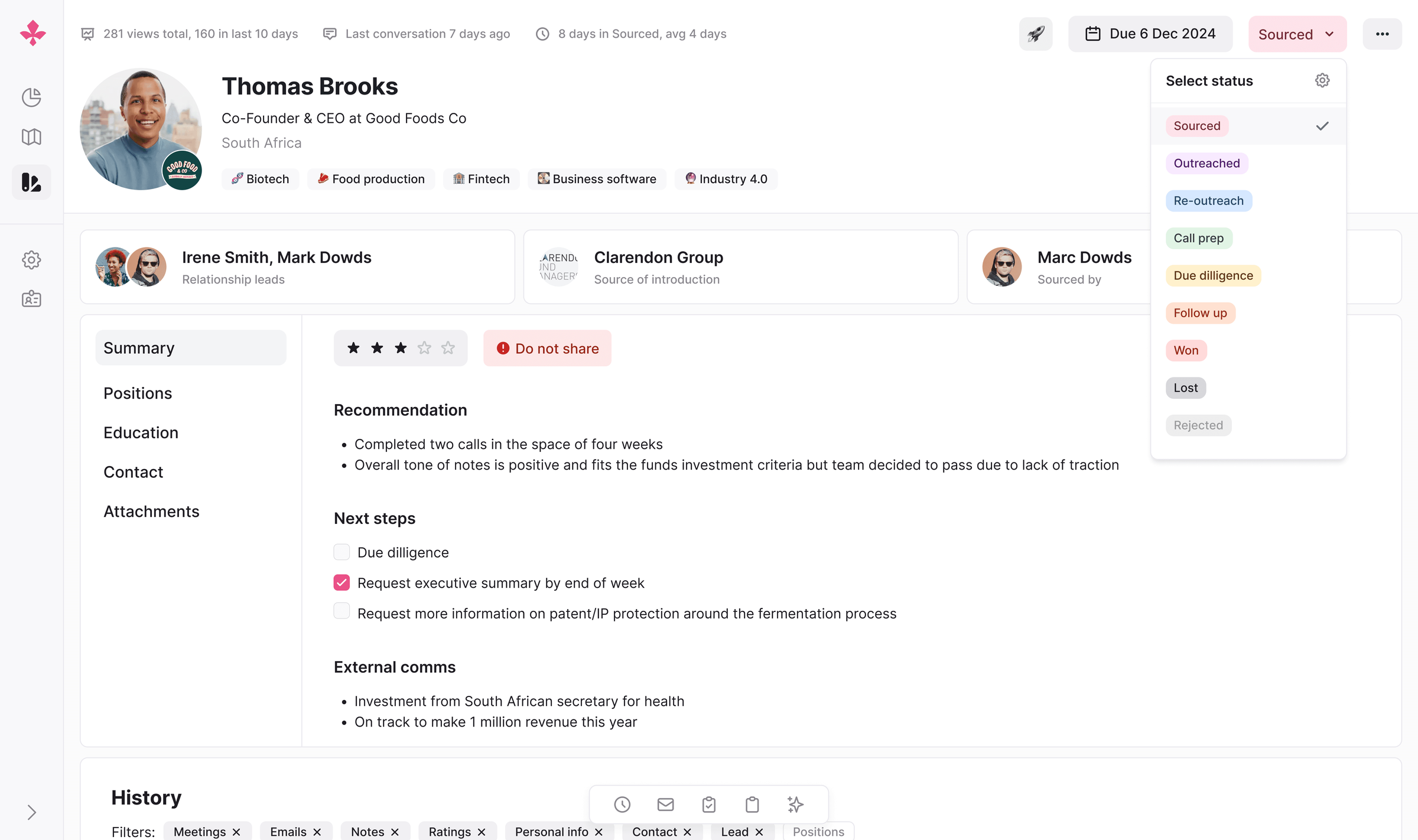
Scout is a CRM platform for venture capital investors. I had never worked in VC before—but that outsider status became my superpower.
In October 2024, a developer I’d worked closely with recommended me for a new project. The product? A CRM platform for venture capitalists.
I joined as Scout’s founding designer, collaborating directly with the CEO (a VC herself), developers, and investors. It was an opportunity to lead the entire design function, build from scratch, and shape a product aimed at raising a £10M valuation by 2028.
Learning through research
To understand our users, I ran biweekly interviews with four VCs. I introduced UX research methods to the team—such as day-in-the-life interviews, feature card sorts, and value-based pricing questions—to uncover pain points and prioritise features. I’m also an unapologetic evangelist for The Mom Test to ensure we're asking the right questions and getting honest answers.
Below is a user interview which I analysed using my favourite research tool, grain.com.
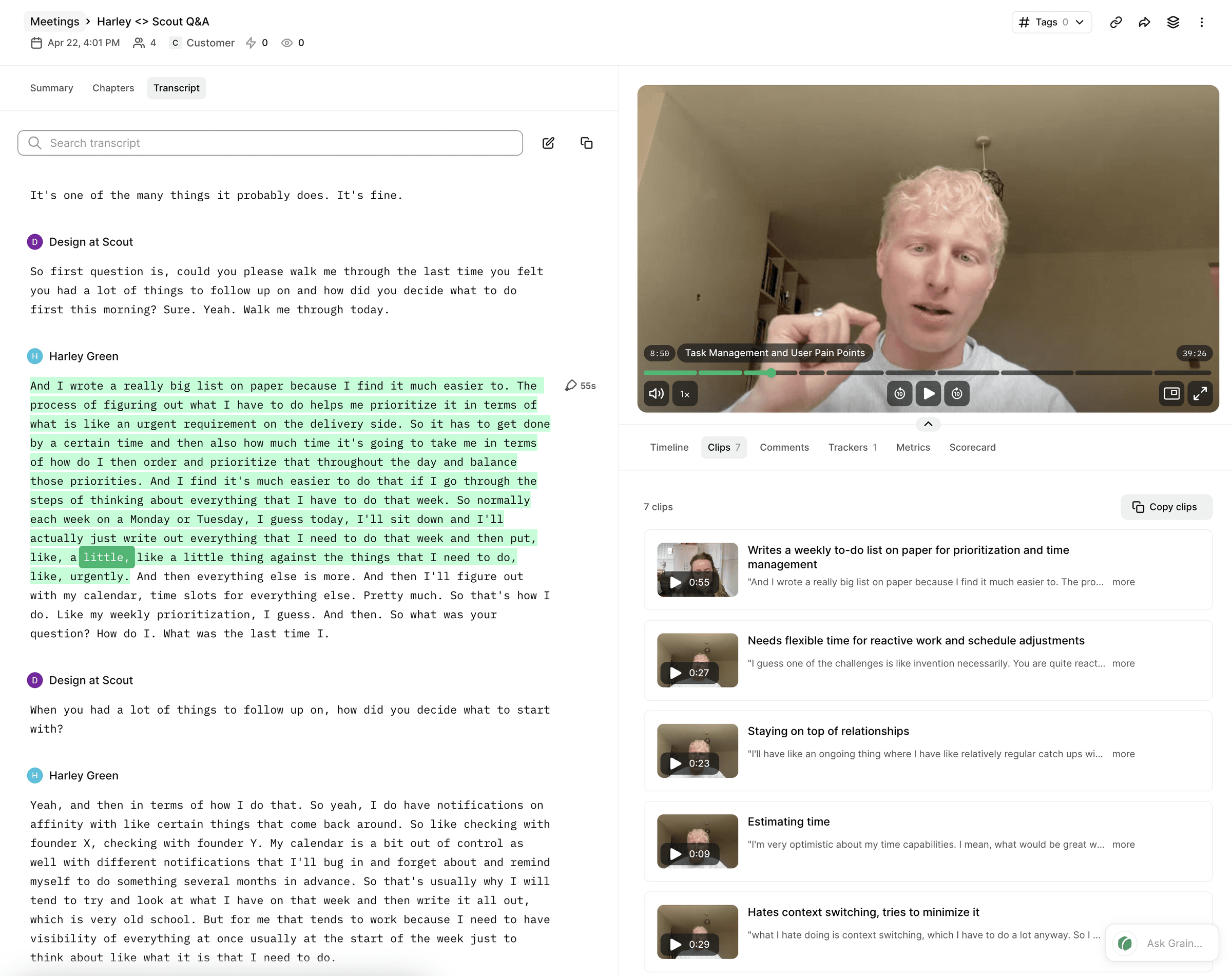
One thing became clear fast: VCs are overwhelmed. They spend 30–40 hours a week in meetings, and their existing tools don’t support the volume and complexity of what they handle. One VC told us they hadn’t touched Scout because they’d spent the entire week manually entering notes into another CRM. That conversation shifted our roadmap entirely—we pivoted to building an AI-populated CRM.
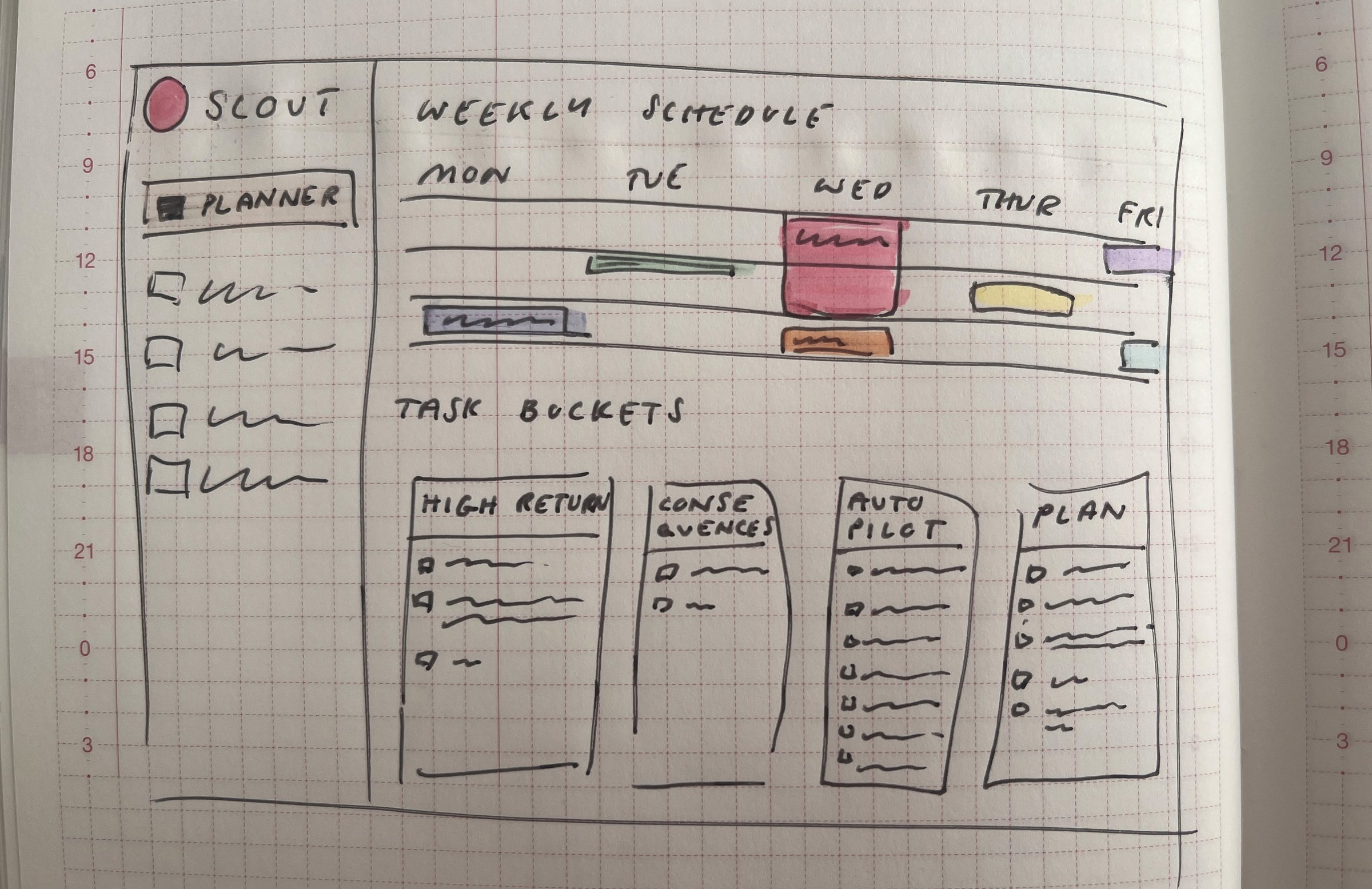
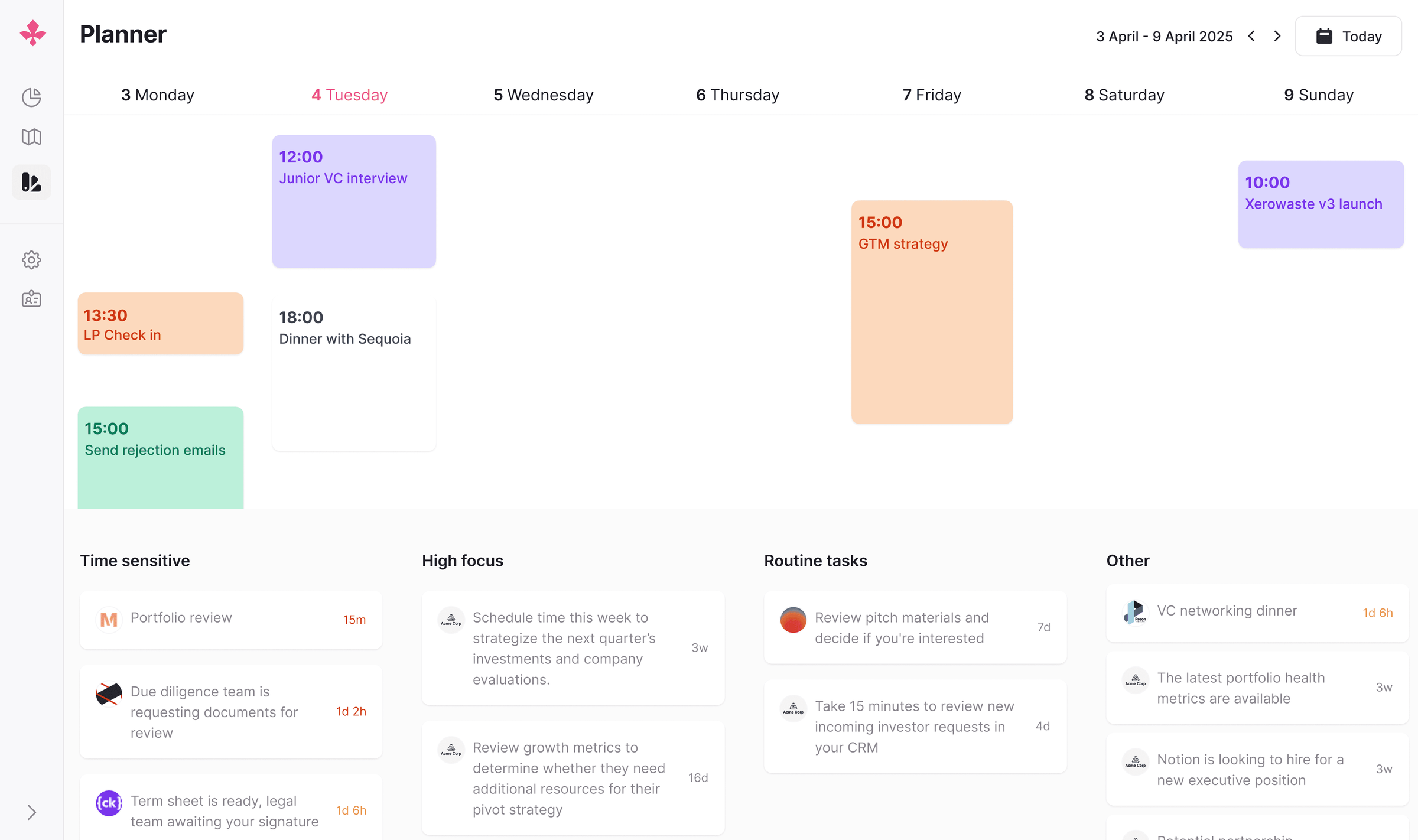
Below is an early stage sketch of our solution to notifications.
Building the product
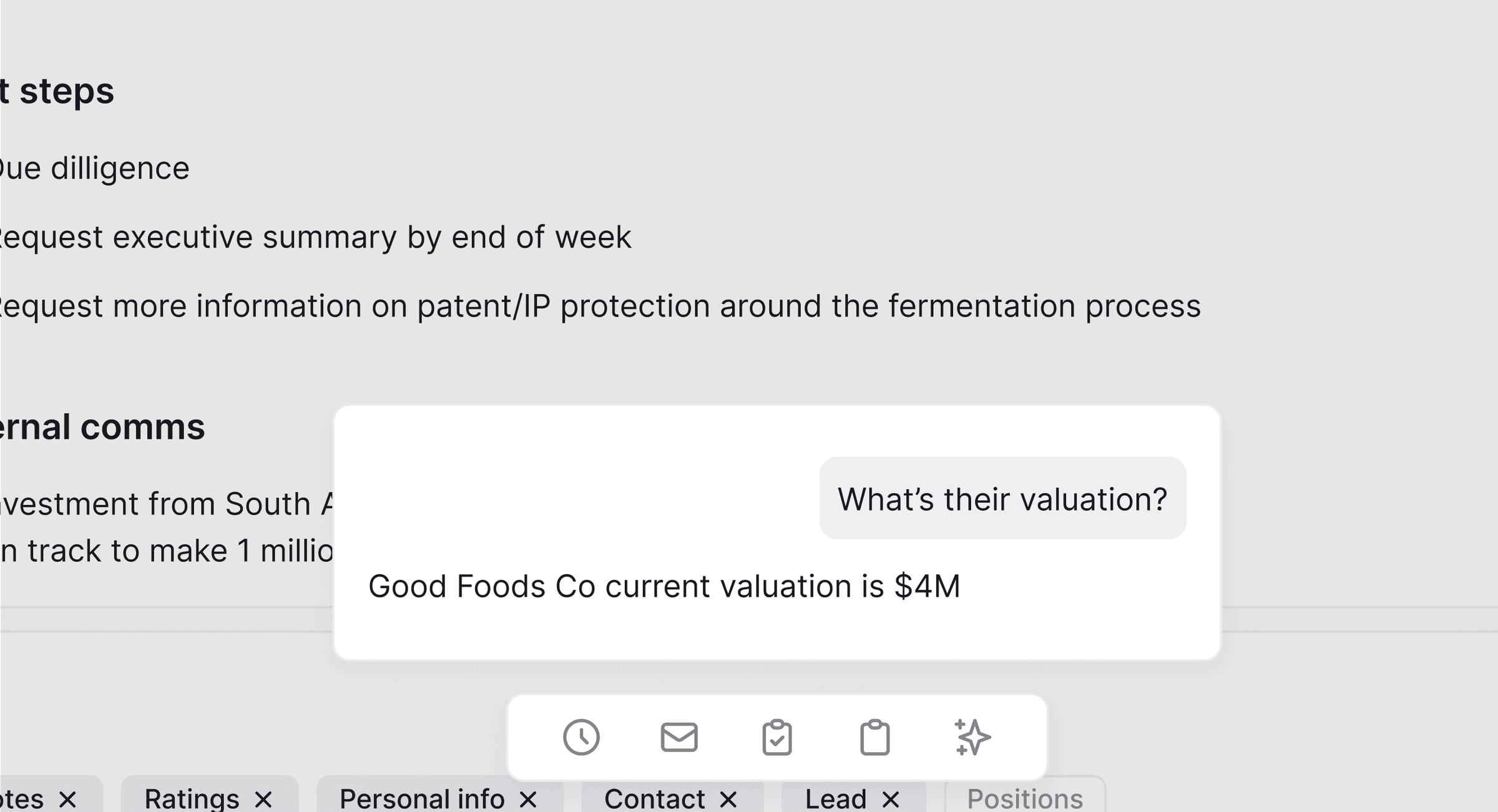
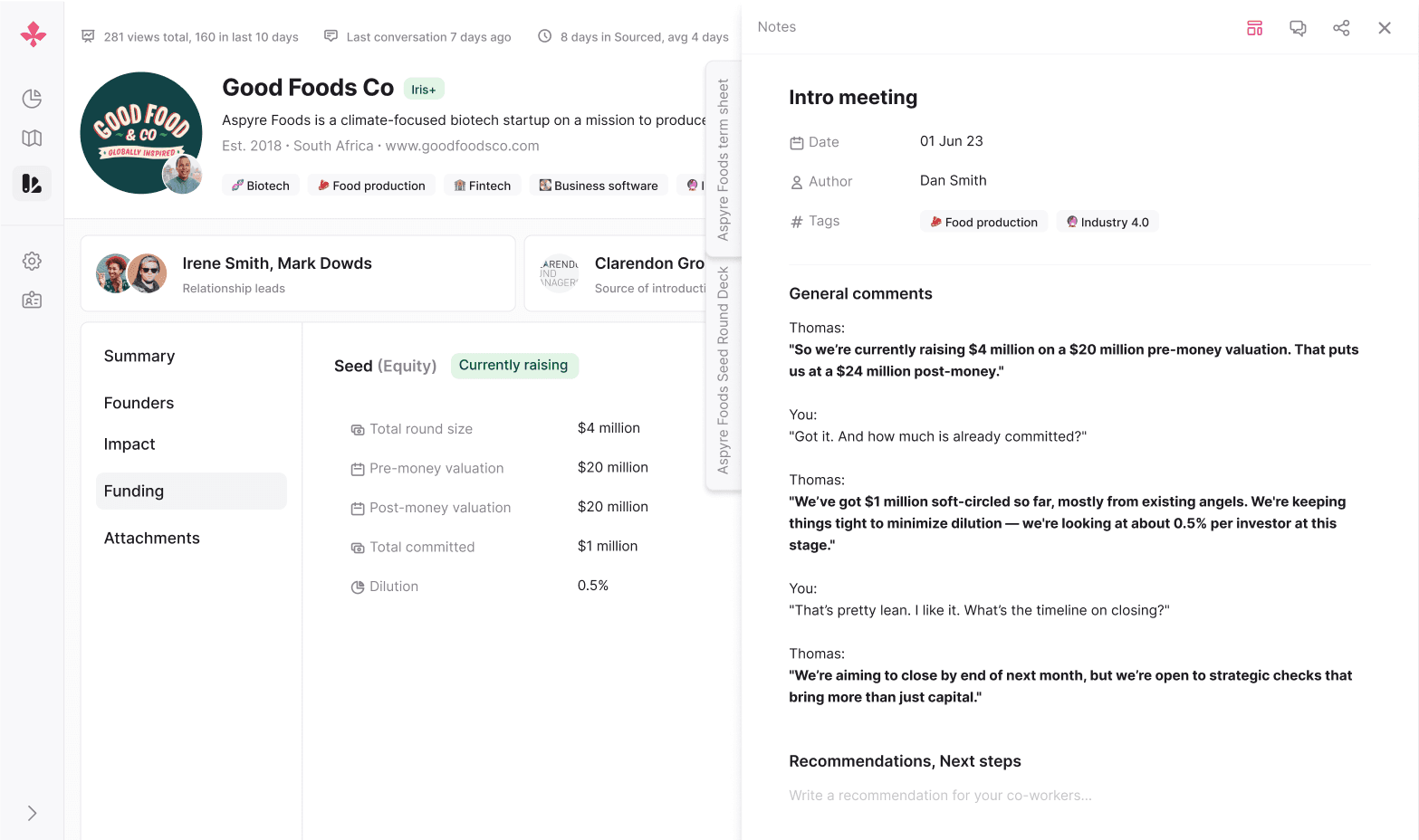
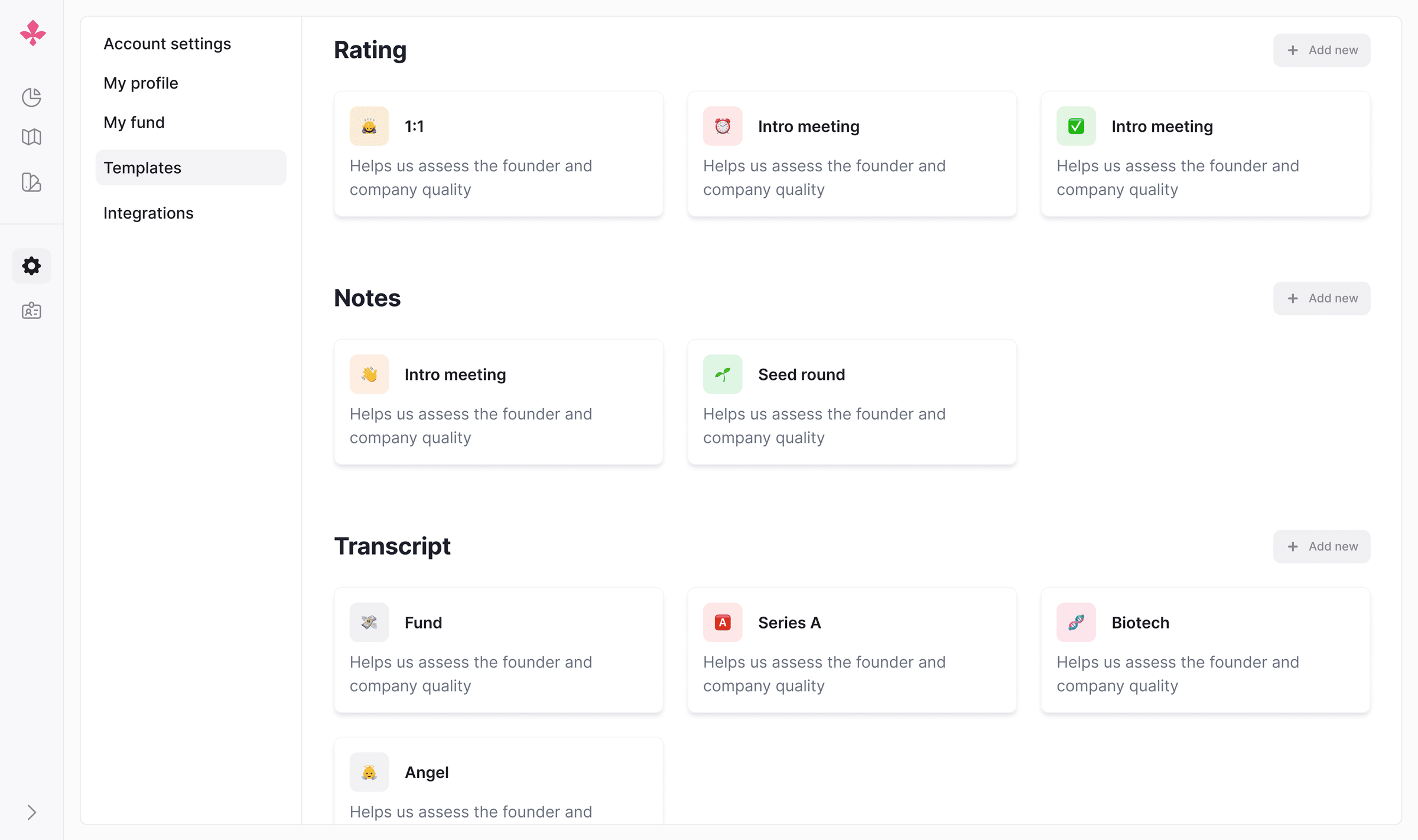
I designed Scout’s entire platform from scratch. Instead of copying bloated legacy systems like Salesforce, I focused on simplicity and support. Features like private notes and source tracking were hidden behind toggles to avoid cognitive overload. I introduced a dual-pane view for multitasking during calls and a persistent AI-powered search bar that keeps answers one click away.
I worked closely with the CEO and our dev team to scope features, prioritize speed, and maintain polish. Every design decision supported real user needs—and aligned with business goals.
Below is a final design of our notification solution.
Leadership in action
As the only designer in a newly formed team, I naturally stepped into a leadership role—not just in design, but in structuring how we worked. Our CEO had never run a product team before, so I helped establish lightweight processes like sprints that kept us aligned and moving fast. This experience sharpened my ability to guide teams through ambiguity and set a product cadence that delivers results without slowing early-stage momentum.
Reflections
This role stretched every design muscle I have—from stakeholder communication to UX research to shipping fast, high-quality work. I’ve learned how to speak with confidence to incredibly experienced people, run lean research, and design tools that solve real, painful problems.
If I could give one piece of advice to designers joining an early-stage startup: ditch the imposter syndrome. You know more than you think. Build fast, listen closely, and lead with kindness.